Will the 8th Pay Commission Be Implemented in 2026? Check New Salary Fitment Factor And Hiked Pay!
The 8th Pay Commission 2026 News is simple: the commission has started work, but implementation won't happen in 2026. The commission was officially constituted on November 3, 2025, with an 18-month deadline to submit its report.
That means the earliest recommendations could arrive around May 2027. The government then needs several months to review and approve. Real implementation likely lands in late 2027 or early 2028.
I've tracked pay commission cycles for years. The pattern is predictable. Commissions take their time, then the government takes more time. Employees wait. Arrears pile up.
Here's what you need to know about the timeline, the fitment factor demands, and what it means for your salary.
Why 2026 Implementation Isn't Happening?
The math doesn't work. The commission started in November 2025. Its mandate runs 18 months. That puts the deadline at May 2027.
Read Also: ITR Filing Deadline AY 2026-27: Staggered Dates Announced - Check July 31 And Aug 31 Deadlines!
Minister of State for Finance Pankaj Chaudhary confirmed in Parliament on August 10, 2026, that the commission has not yet submitted its report. No report means no recommendations. No recommendations mean no implementation.
Compare this to the 7th Pay Commission. It was constituted in February 2014. It submitted its report in November 2015. The government approved it in June 2016. That's a two-year gap from start to finish.
The 8th CPC follows a similar path. Constitution in November 2025. Report deadline May 2027. Government approval likely six months later. Implementation by late 2027 or early 2028.
The Effective Date vs. Actual Payment
Here's where it gets confusing. The new pay structure will likely be effective from January 1, 2026. That's the traditional 10-year cycle date.
But effective date doesn't mean payment date. Employees won't see revised salaries until the commission finishes its work. When implementation finally happens, they'll receive arrears covering the gap.
ICRA's report warned about this. Retrospective implementation from January 2026 could mean 15 months or more of arrears paid in one go. That creates a massive one-time payout burden on the FY2028 budget.
What Employee Unions Are Demanding?
Two major organizations have submitted formal demands. Their proposals differ significantly.
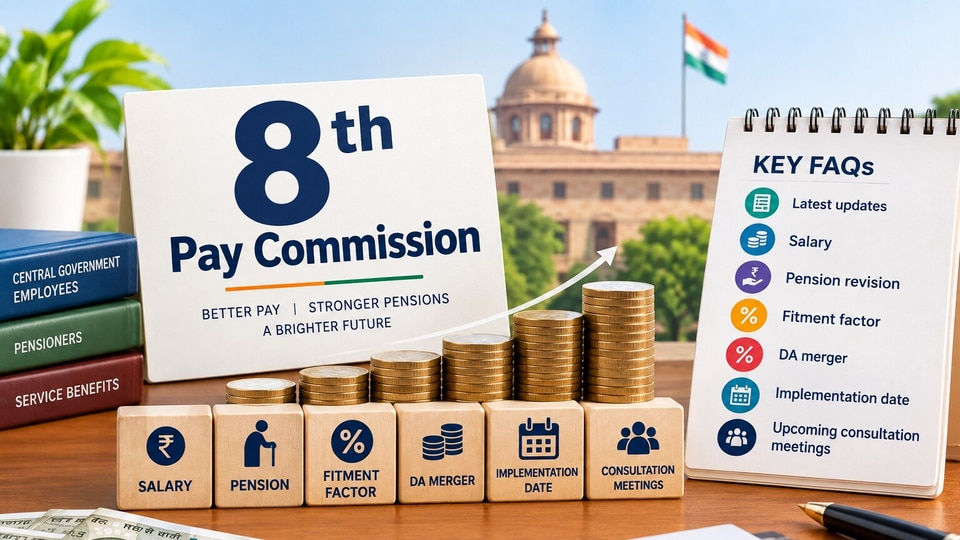
NC-JCM (National Council-Joint Consultative Machinery) wants a minimum basic pay of ₹69,000. They're asking for a fitment factor of 3.833. They also want the annual increment raised from 3% to 6%.
You Must Also Like: EPFO Job Change PF Transfer Eligibility: Rules And Process 2026
BPMS (Bharatiya Pratiraksha Mazdoor Sangh) wants even more. Their demand: ₹72,000 minimum basic pay and a fitment factor of 4.0.
The Railway Technical Supervisors' Association proposed something different. They want variable fitment factors by pay level. Levels 1-5 would get 2.92. Levels 17-18 would get 4.38. Their argument: the current system compresses wage gaps between junior and senior technical staff.
None of these demands are final. The commission will weigh them against fiscal reality.
Fitment Factor: The Number That Matters Most
The fitment factor is a multiplier. You take your current basic pay. You multiply it by the factor. That gives you your new basic pay. Under the 7th Pay Commission, the factor was 2.57.
That raised the minimum basic salary from ₹7,000 to ₹18,000.
For the 8th CPC, estimates range widely. Some reports suggest the government might settle around 2.28 to 2.86. Unions want 3.83 or higher. Here's what different factors mean for a Level-7 employee (starting basic pay ₹44,900):
| Fitment Factor | New Basic Pay | HRA in Metro City (30%) |
|---|---|---|
| 2.0x | ₹89,800 | ₹26,940 |
| 2.5x | ₹1,12,250 | ₹33,675 |
| 3.0x | ₹1,34,700 | ₹40,410 |
A 3.0 factor would triple basic salaries for many employees. The HRA increase alone would be dramatic.
But here's a counterargument worth understanding. A lower fitment factor doesn't automatically mean a smaller raise. One employee representative explained why.
When the 7th CPC was implemented, DA was at 125%. The old basic plus DA was ₹15,750. The new basic was ₹18,000. The actual increase was about 32%, not 157%.
If the 8th CPC sets a fitment factor of 2.1, with current DA at 58%, the effective benefit could be around 53%. That's bigger than what the 7th CPC delivered . The headline factor matters less than the math behind it.
The HRA Problem Nobody's Talking About
Here's a detail that could cost employees real money. HRA historically is not paid with retrospective effect.
Basic pay arrears will eventually arrive. But the HRA gap during the delayed period might become a permanent loss. For employees in metro cities, where HRA runs at 30% of basic pay, that's significant money.
Officials and unions are already flagging this concern. It's worth watching as the process moves forward.
DA Hike News: What's Happening Now?
While the 8th CPC grinds along, DA increases continue under the 7th CPC framework.
The Labour Bureau released August 2026 inflation data on September 30. The AICPI-IW rose to 154.4 from 153.2 in July. That pushed the estimated DA to 65%.
The government hasn't officially announced the June 2026 DA hike yet. But estimates suggest it will be around 63%.
DA announcements typically come during festival season. Last year, Dussehra fell on October 2, and the DA announcement came on October 6. Employees are watching for a similar pattern this year.
8th Pay Commission Timeline: Key Dates
| Milestone | Date |
|---|---|
| Commission constituted | November 3, 2025 |
| Stakeholder consultations begin | April 2026 |
| Suggestions deadline | March 16, 2026 |
| Report submission deadline | May 2027 |
| Earliest implementation | Late 2027 or early 2028 |
Who Benefits?
The commission's recommendations will affect over 1 crore people. That includes approximately 50 lakh central government employees and 65 lakh pensioners. Defence and railway personnel are also covered.
The Terms of Reference cover pay, allowances, pensions, gratuity, and service conditions. The commission will also review bonus arrangements and performance-linked incentives.
What Employees Should Do Now?
Don't wait for the 8th CPC to plan your finances. The implementation is at least a year away.
Keep tracking DA announcements. Those continue under the current system and affect your salary now.
Document your current basic pay and DA. When arrears finally arrive, you'll want to verify the calculation.
Understand that arrears are taxable in the year received. A lump sum payment could push you into a higher tax bracket. Plan accordingly.
Final Thoughts
The 8th Pay Commission 2026 News is clear: work has started, but implementation is years away. The commission will submit its report by May 2027.
Government approval will take several more months. Employees will receive arrears covering January 2026 onward, but actual salary revisions likely arrive in 2028.
The fitment factor remains the biggest unknown. Unions want 3.83 or higher. The government will balance those demands against fiscal constraints. The final number will determine how much salaries actually rise.
For now, patience is the only option. The process moves slowly, but it moves. Employees will get their money. Just not this year.