Virat Kohli T20 Strike Rate Analysis: How the Icon Redefined His Modern Game?
I sat in front of my TV on June 1, 2026, watching the IPL final. Virat Kohli walked out to bat. I expected the usual. Take ten balls to settle. Feel the middle. Then go.
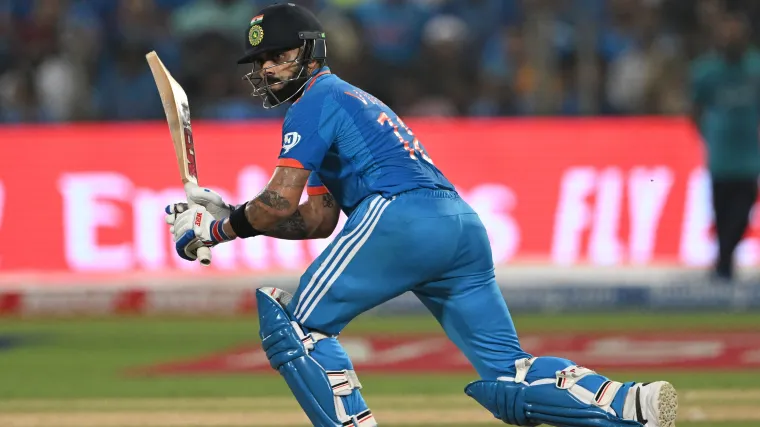
He hit the second ball for four. Then another. Then a six off Kagiso Rabada that landed in the second tier. Twenty-five balls later, he raised his bat. Fifty runs. The fastest half-century of his 19-year IPL career.
I replayed that innings three times. Not because of the shots. Because of what they meant. The man changed. Not slowly. Not subtly. He looked in the mirror and decided to become a different kind of monster.
Let me show you what happened, why it worked, and what it means for anyone who thought they knew who Virat Kohli was.
The Numbers That Made My Jaw Drop
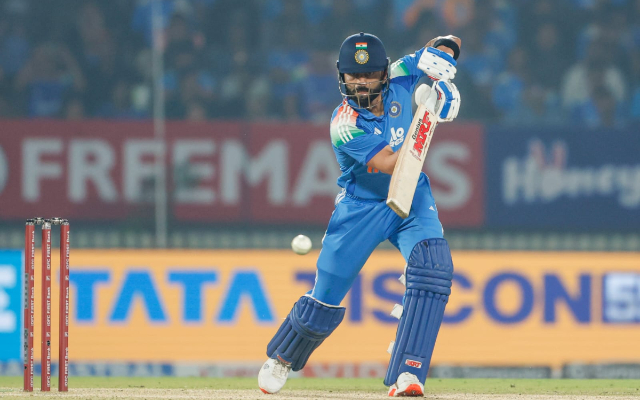
I keep a spreadsheet of Kohli's IPL seasons. Updated it after the final. The 2026 column looks like a typo.
Virat Kohli T20 strike rate by season:
-
2023: 139.82
-
2024: 154.69
-
2025: 144.71
-
2026: 165.84
Six hundred and seventy-five runs in 16 matches. Average of 56.25. An IPL-best strike rate of 165.84. But here is what the season average hides. Look at the Powerplay numbers alone.
| Season | Powerplay SR | Powerplay Runs | |
|---|---|---|---|
| 2023 | 136.8 | 301 | |
| 2024 | 161.5 | 373 | |
| 2025 | 157.4 | 318 | |
| 2026 | 174.76 | 360 |
Over half the balls he faced this season came in the Powerplay. That has never happened before. He scored 53 percent of his total runs in the first six overs. Also a career high.
He played the fewest dot balls among the top eight Powerplay run-getters. Only 58 dots across 16 matches.
For context, Vaibhav Sooryavanshi hit 46 sixes in the Powerplay. Kohli hit 11. Yet their strike rates are only 60 points apart. That is the difference between swinging blind and picking gaps with surgical precision.
The Technical Change You Can Actually See
I watched hours of Kohli's batting footage from 2023 and 2026 side by side. The difference is not in his stance. It is in his first move.
The old Kohli: Waited for the ball to arrive. Played it late. Found the gap along the ground.
The new Kohli: Steps down the pitch before the bowler releases. Converts good-length balls into half-volleys. Takes the bowler's margin for error away.
The data backs this up. In 2026, Kohli is attempting a lofted shot every 3.8 balls. Across the previous three seasons, that number was 7.3. He is doubling his aerial intent.
The most shocking number I found? Against good-length deliveries from pacers in 2026, he struck at 208.5. In previous seasons, that number was 131.8.
Think about what that means. Bowlers used to target that length against Kohli. It was safe. He would nudge it around. Now he launches it over mid-off. The entire bowling plan against him has to be rewritten.
Sanjay Bangar, former RCB coach, put it simply: He can raise the bar anytime in terms of strike rate. He can hit those boundaries or sixes at will.
What Forced This Change? A 15-Year-Old Kid
I need to tell you about Vaibhav Sooryavanshi.
The kid turned 15 during IPL 2026. He plays for Rajasthan Royals. He scored 521 Powerplay runs at a strike rate of 233.63. He hit 46 sixes in the first six overs alone.
Kohli watched this teenager treat international bowlers like a video game on easy mode.
Here is what Kohli said after winning the final: You have these super young players pushing you all the time and really asking you to change your game and up the ante. It's an exciting situation because it gives you something to improve on.
Let that sink in. A 37-year-old, 19-season veteran, with 9,000 IPL runs and two World Cups, looked at a 15-year-old and said: "I need to get better."
Sanjay Manjrekar noticed the shift too. At this stage, watching him in this tournament, he has mastered the art of T20 batting that is needed in IPL cricket. Which means now he knows that he has to score at a 150 to 160 strike rate. So he cashes in the first six overs.
Manjrekar made another sharp observation. Kohli is not trying to hit 90-meter sixes. He is hitting the ball just far enough to clear the infield. That keeps his technique intact. No mishits. No balance issues. Just clean, controlled aggression.
The Middle Overs Transformation Nobody Expected
The Powerplay change is obvious. But I want to talk about overs 7 to 15.
This used to be Kohli's "control" phase. He would rotate strike. Keep the board moving. Wait for the death overs to accelerate.
In 2026, that phase looks completely different.
His strike rate in the middle overs jumped to 163.5. That is nearly 30 points higher than 2025. He is not waiting anymore. He is sustaining pressure through the entire innings.
Against spin, the numbers moved only marginally. That tells me something important. Kohli is not trying to dominate spinners. He is comfortable playing them at 130-140 strike rate. The real damage comes against pace.
Eighty percent of his runs this season came against fast bowlers. 542 runs at a strike rate of 177.7.
The tactical implication is clear. Teams used to save pace for the death against Kohli. Now they have nowhere to hide. He attacks pace from ball one.
What This Means for Your Understanding of T20 Batting?
I have watched enough cricket to know that most players do not change after 35. They refine. They optimize. They do not reinvent. Kohli reinvented.
You Must Also Like: RR vs LSG Highlights: Archer and Jadeja CRUSH Lucknow! IPL 2026
Here is what he actually did, stripped of all the commentary:
Step one: He admitted the game passed him slightly. "Such is the demand of the sport today," he said after the final.
Step two: He identified the specific gap. Not enough intent in the Powerplay. Too many dot balls. Too much reliance on the death overs.
Step three: He changed his intent without changing his technique. I had to change my mindset, not my game so much, to play the shots I already have more often and take the bowlers on.
That last part is crucial. He did not learn the scoop. He did not add a switch-hit. He just decided to use his existing shots earlier and more often.
The result? A 25-ball fifty in the final. His fastest ever in IPL cricket.
The Honest Take: Is This Sustainable?
I have been asked this question by three different friends this week. Here is my honest answer.
Kohli is 37. His game has always relied on immaculate fitness and hand-eye coordination. Those things do not get better with age. But here is why I think this version sticks.
He is not playing a high-risk game. He is not swinging blindly. He is simply trusting his abilities earlier in the innings. The technical foundation is the same. The shot selection is the same. The only difference is tempo.
Sanjay Manjrekar said it well: "He has found this power game, which is just about optimum. It's almost like he is in third and fourth gear, while the others are trying to hit at a strike rate of 200 and 230".
Because he is not redlining, he does not mishit. Because he does not mishit, he does not get out. Because he does not get out, he faces more balls. Because he faces more balls, he scores more runs.
That is a sustainable loop.
The One Thing That Worries Me
I will be honest about one concern.
Kohli's numbers against spin have not improved much. He is still scoring at roughly the same rate against slow bowling as he always has .
In T20s, that is a problem. The best teams will pack their middle overs with spinners. They will dry up his scoring. They will force him to take risks against his weaker suit.
The counter-argument is that RCB's batting order is deep enough to absorb that. If Kohli plays spin at 135 strike rate, Patidar and Livingstone can attack from the other end.
But in a knockout match where he is the last line of defense? That is still untested territory.
The Final Thoughts
The Virat Kohli T20 strike rate conversation is over. He settled it. Not with words. With a 25-ball fifty in a final. He scored 675 runs at 165.84. He hit faster than any version of himself in 19 years.
He did it by trusting his team, trusting his shots, and trusting a 15-year-old kid to push him into a new gear. Manjrekar called it "mastering the art of T20 batting". I think it is simpler than that. He just decided to stop saving himself for later.
Later is here. And Virat Kohli is still standing.
One request: The next time someone tells you that players cannot change after 35, show them the 2026 season spreadsheet. Then watch them try to argue with numbers.