The True Story Behind the Neha Bora Protest
The Neha Bora protest story isn't just about one woman. It's about a 29-year-old PhD scholar who became the face of a youth movement in Delhi. On October 11, 2026, Neha Bora, the AISA president, led a demonstration at RK Ashram Metro station.
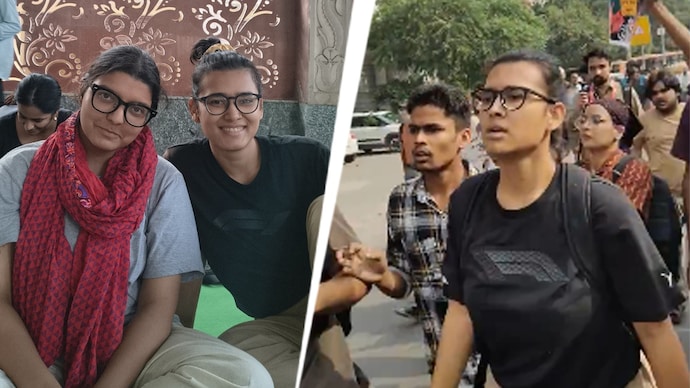
What happened next confused everyone. Police detained a woman who looked exactly like her. Same stole. Same round black glasses. Same mask. Media flashed "Neha Bora detained." But it wasn't her.
The real Neha Bora had already slipped away to Connaught Place. She was running ahead of police. This moment captured why so many young Indians now follow the neha bora protest movement. It feels unpredictable. It feels real.
Who Is Neha Bora, Really?
Neha Bora hails from Khatima in Uttarakhand. Her father served in the Indian Army. She moved between cities as a child. She studied at Hindu College in Delhi University.
Read Also: Will the 8th Pay Commission Be Implemented in 2026? Check New Salary Fitment Factor And Hiked Pay!
Then she did her master's at Dr. B.R. Ambedkar University. Right now, she's pursuing a PhD in Theatre and Performance Studies at JNU.
She didn't come from a political family. Her father doesn't approve of her left-wing views. They haven't spoken in 10 years. In one interview, she recalled him saying, "Our people are killed; these are the very people who kill them. How can you go with them?"
That tension says a lot. Neha Bora didn't inherit activism. She chose it.
How Did She Become the Face of This Protest?
Neha's path to national attention started earlier in 2026. She took part in a 23-day hunger strike at Jantar Mantar. The fast demanded the resignation of then-Education Minister Dharmendra Pradhan. That protest centered on exam paper leaks.
By October, she was leading AISA into the CJP protests. CJP stands for Cockroach Janta Party. It began as an online satirical movement. It became a real force.
The demands were specific. CJP wanted Chief Election Commissioner Gyanesh Kumar to resign. They pointed to the Special Intensive Revision of electoral rolls. Critics said this revision removed millions of voters. They argued it hurt poor and minority communities. The BJP denied this.
Neha Bora brought something different to these protests. She wasn't just giving speeches. She was jumping barricades. She was marching next to Rahul Gandhi.
When police detained her near INA market, she posted on X: "I am in detention. The movement is not." She told people to gather at Safdarjung Flyover. That line became a slogan.
The "Duplicate Neha" Incident Explained
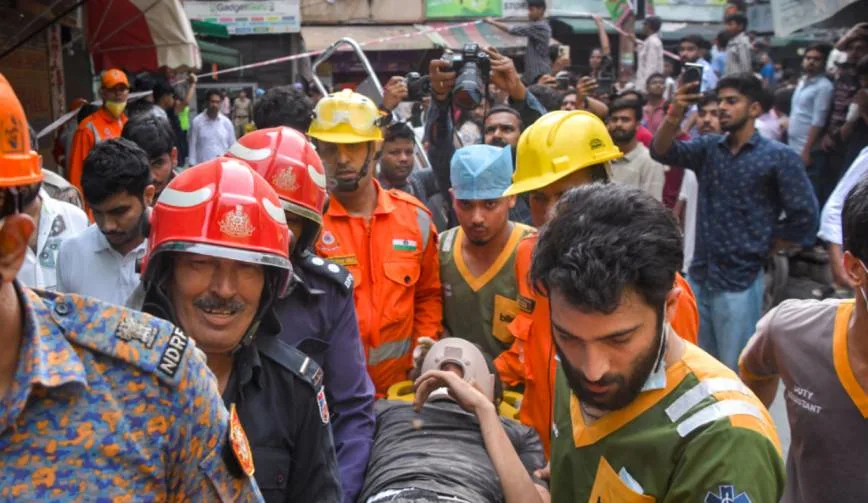
The October 11 incident showed how chaotic these protests became. Neha announced the RK Ashram protest on social media. Police flooded the area. Around 2:15 PM, they started detaining people.
You Must Also Like: Pakistan to Protest after Asia Cup Fan Violence in Sharjah
A woman appeared in the crowd. She wore Neha's exact style. The police grabbed her. Media cameras zoomed in. Then everyone realized: that's not Neha. The real Neha was already at Connaught Place. She was running ahead of police. An Instagram reel from her account proved it.
By evening, police caught the real Neha Bora at Vijay Chowk. Around 50 people were detained across both locations.
This wasn't a stunt. It was survival. Protesters in Delhi face mass detention. Over 7,000 people were detained on one Saturday alone. Police filed 20 FIRs. More than 15 officers reported injuries. The "duplicate" moment showed how carefully organizers had to move.
What Makes the Neha Bora Protest Different?
Most Indian protests follow predictable patterns. They have clear leaders. They have specific demands. They negotiate. They end. The neha bora protest breaks that mold.
First, Neha uses they/them pronouns. That's rare for a public figure in India. It signals a different kind of politics. One rooted in inclusion, not just opposition.
Second, the movement isn't purely ideological. It started with exam paper leaks. That issue cuts across caste, class, and religion. As one analyst told the BBC, "The exam and education system cuts across caste, class and gender to quite a large degree."
Third, the leadership is young. Neha is 29. CJP founder Abhijeet Dipke is also young. They use Instagram and X to organize. They speak in memes and reels. Modi's government tried to respond with a vertical selfie video at midnight. It felt like a generation gap in real time.
The Reality on the Ground in Delhi
If you're following protest live updates or searching for protest in Delhi today, here's what you need to understand. Delhi Police have been aggressive. They detained journalists. They detained MPs. On October 10, they detained Rajya Sabha MP John Brittas. They manhandled him.
But here's what's strange. Viral videos showed saffron-clad men attacking protesters. These men claimed links to Hindu Raksha Dal. They assaulted students in front of police.
The police detained protesters. They arrested only four of the attackers. The leader of Hindu Raksha Dal bragged about it on X. He called protesters "cockroaches". The Supreme Court stepped in. They barred illegal detention of protesters on October 10. But detentions continued.
This isn't a simple story of good versus bad. It's messy. Police have a job to maintain order. Protesters have a right to assemble. Both sides claim the other provoked violence.
Why Young Indians Are Paying Attention?
Walk through any coaching center in Kota or Delhi. Talk to students preparing for NEET or UPSC. You'll hear the same fear: what if the exam gets leaked? What if my future is decided by corruption I can't control?
That fear is the fuel behind this movement. The NEET paper leak in May 2026 was the trigger. Nearly 2.28 million students took that exam. It got cancelled. A re-test happened. But trust was broken.
Sonam Wangchuk, the climate activist, went on a 26-day hunger strike. He lost 11 kg. He ended it after the government promised exam reforms and no legal action against protesters.
Dharmendra Pradhan eventually resigned as Education Minister. CJP called off that phase of agitation. But then the focus shifted to the Election Commission. Different issue. Same anger. Same energy.
The CJP Connection: What You Need to Know?
CJP started as a joke. "Cockroach Janta Party." The name mocked how the government treated young people. Like pests to be ignored. It became something real.
By October, CJP was holding protests in multiple cities. Bengaluru saw two separate demonstrations. One targeted the Chief Election Commissioner over SIR.
The other was a "chappal protest" for women's safety. Women used slippers as symbols of resistance. The demands are detailed. CJP wants:
-
Gyanesh Kumar's resignation
-
Criminal proceedings against him
-
Suspension of upcoming elections
-
Restoration of the January 2025 voter list
-
Independent inquiry into SIR
-
Repeal of the 2023 law governing Election Commissioner appointments
Neha Bora's AISA joined these protests. So did SFI, AISF, and other student groups.
What the Government Says?
The government points to its actions. Modi announced a tough new law on exam paper leaks. He said he received a draft and wanted to introduce it soon.
Federal Minister JP Nadda met with CJP representatives. He said the government would respond to their demands. But CJP isn't satisfied. Spokesperson Saurav Das said, "Even if Gyanesh Kumar resigns, we will not bow down." The demands go beyond one person.
The BJP accuses opposition parties of exploiting students. Pradhan said Congress was "shamelessly exploiting students as political tools to manufacture disruption."
A Word of Caution About Viral Content
If you're searching for CJP protest news or protest live updates, be careful. Videos spread fast. Some are real. Some are edited. Some are old footage recycled.
The "duplicate Neha" incident shows how quickly misinformation spreads. Media reported "Neha Bora detained" when she wasn't. For a few hours, the story was wrong.
Check multiple sources. Look for timestamps. Be skeptical of anything that feels too dramatic.
What Happens Next?
The protests continue. CJP warned of new nationwide demonstrations if police harassment persists. They pointed to an interim Supreme Court order that allowed FIRs against protesters to proceed.
CJP said this contradicted the government's earlier promise to withdraw all cases. Neha Bora remains a central figure. She's been detained multiple times. She keeps showing up. Her social media posts get shared thousands of times.
Whether this movement changes Indian politics is unclear. Student movements have risen and faded before. But something feels different this time.
The anger isn't about one exam or one election. It's about whether the system works for young people at all. Neha Bora put it simply in one post: "We will write the future with ink."
That ink was thrown at her during a protest in Jharkhand. She turned it into a slogan.
That's the neha bora protest in one sentence. They throw ink. She writes with it.